Water dust suppression system-dust control expert



Dry Fog System: An Industrial Solution for Micron-Level Atomization and Dust Suppression
2026-09-29


A dry‑mist system is a specialized dust‑suppression device that combines compressed air with pressurized water and uses ultrasonic vibration to generate micron‑scale water droplets. The system typically comprises a dry‑mist dust‑suppression unit, an air compressor, an air receiver tank, a water‑air distribution manifold, ultrasonic dry‑mist nozzles, and an electrical control panel. Depending on the on‑site dust‑generation conditions, the nozzles can be flexibly arranged to create a “cloud‑like dust‑control barrier” that envelops dust‑emitting sources.
The core of the dry‑mist system lies in its “particle‑size‑matching” dust‑suppression mechanism. Research conducted at Colorado College in 1976 demonstrated that when water‑mist droplets are comparable in size to dust particles, the probabilities of adsorption, filtration, and coalescence are maximized. The system employs compressed air to drive a sonic oscillator; within the nozzle’s resonant chamber, high‑frequency acoustic shock waves atomize water into extremely fine droplets, producing mist with diameters ranging from 1 to 10 micrometers—droplets smaller than 10 micrometers are referred to as “dry mist.” This particle‑size range closely matches that of inhalable particulate matter such as PM10 and PM2.5. As the mist droplets collide with, adhere to, and coalesce into dust particles in the airflow, they increase in mass and settle, thereby achieving source‑level dust suppression. By contrast, if the droplet size exceeds that of the dust particles, the dust will merely be entrained by the airflow surrounding the droplets, resulting in minimal contact and a severely diminished dust‑suppression effect. Consequently, the key to a dry‑mist system is to maintain droplet sizes within the micrometer range, thus maximizing collision efficiency with airborne particulates.
Dry‑mist systems are widely employed for dust control in uncontrolled emission sources across industries such as metallurgy, mining, thermal power plants, coal‑coking chemical processing, port terminals, cement plants, and coal mines. Specific applications include dust suppression in enclosed or semi‑enclosed spaces at dust‑generating points like belt transfer stations, hoppers, discharge chutes, and crushing‑screening units, as well as dust management in the pre‑furnace belt conveyor systems of coal preparation plants. In addition, dry‑mist technology can be utilized for disinfection and sterilization, leveraging micron‑scale droplets to achieve highly efficient microbial inactivation; and in humidity‑sensitive processes such as SMT electronics manufacturing, dry‑mist humidity control systems effectively mitigate issues like electrostatic discharge and poor component placement.
A key feature of the dry‑mist system is its extremely low water consumption, with a material‑moisture‑increase‑by‑weight ratio of only 0.02% to 0.05%. It does not wet the material, generates no secondary contamination, and preserves the material’s calorific value. The system achieves a removal efficiency of over 98% for respirable dust particles smaller than 10 microns, effectively reducing the risks of silicosis and dust explosions. With no moving parts inside the equipment—apart from the water pump and air compressor—the system requires virtually no maintenance. Its modest installed power and low operating costs make it far more economical than conventional baghouse or negative‑pressure dust‑collection methods. During winter operation, workshop temperatures remain largely unaffected, enabling stable year‑round performance. The system supports fully automated, intelligent control, seamlessly integrating with production facilities and real‑time dust‑monitoring data to enable automatic start‑stop cycles and precise dust suppression.


TAG:
Related Posts
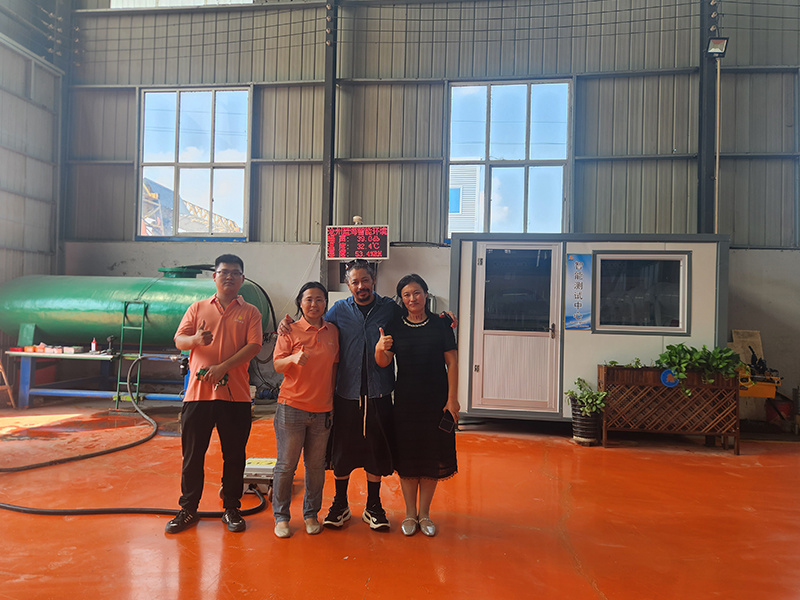
Customers come to visit our factory


Leave Message
Navigation
Contact Us
Address:
Jiaohe Industrial Park, Botou, Cangzhou city, Hebei province, China
E-mail:
Phone/WhatsApp: