Water dust suppression system-dust control expert



Air‑blown evaporator: an efficient atomization‑evaporation solution for zero liquid discharge of high‑salinity wastewater.
2026-10-05


A wind‑assisted evaporator is an environmentally friendly device that uses a high‑speed rotating impeller to forcibly atomize concentrated brine into fine droplets and, with the aid of a fan, transports the resulting mist over long distances into the atmosphere for rapid evaporation. It comprises a water‑supply system, a droplet‑breaking system, a wind‑delivery system, and an electrical control system. The unit can be installed floating on the surface of an evaporation pond or mounted on the shore, transforming conventional two‑dimensional evaporation in ponds into three‑dimensional spatial evaporation. It represents a cost‑effective solution to the problem of overflow in high‑salinity wastewater evaporation ponds.
The core of the equipment lies in the synergistic process of “breakup and atomization combined with air‑borne dispersion.” After concentrated brine is delivered to the breakup system via the water supply network, a high‑speed, turbo‑charged atomizing device shatters the water into fine droplets measuring 50 to 100 microns. These droplets are then carried over long distances into the atmosphere by a high‑velocity airflow generated by a fan, maximizing the contact area between the mist and the ambient air. Under natural conditions—such as solar radiation, wind, and temperature differentials—the droplets evaporate rapidly, releasing water vapor into the atmosphere while the dissolved salts and contaminants, due to gravity, settle back into the evaporation ponds. This achieves both wastewater volume reduction and zero external discharge of pollutants.
Air‑blown evaporators offer significant advantages in energy consumption and operation & maintenance. The equipment requires no external heating for evaporation, consuming only 4 to 5 kWh per ton of water, resulting in extremely low operating costs. All seals are designed for maintenance‑free operation, enabling continuous, nonstop performance under normal conditions with only one annual inspection. Constructed from duplex stainless steel, the unit exhibits excellent corrosion resistance, making it well suited to harsh water quality and complex environmental conditions typical of evaporation ponds. With centralized PLC control, wireless network monitoring, and remote operation capabilities, it can achieve fully automated, unattended operation.
This equipment is widely used for the oxidative evaporation treatment of high-salinity wastewaters, including flue‑gas desulfurization wastewater from power plants, concentrated brine from coal chemical processes, concentrated leachate from landfills, mine water, aquaculture effluent, and textile dyeing wastewater. When paired with a mechanical atomization evaporation system in evaporation ponds, it can enhance evaporation efficiency by 14 to 30 times, reducing the required pond area to as little as one‑tenth of that needed for conventional evaporation. This performance is particularly pronounced in arid regions of Northwest China, where rainfall is scarce and solar irradiance is abundant. Compared with traditional multi‑effect evaporation or MVR technologies, this solution offers lower capital and operating costs, making it a key technological choice for achieving zero liquid discharge in industrial wastewater treatment.


TAG:
Related Posts
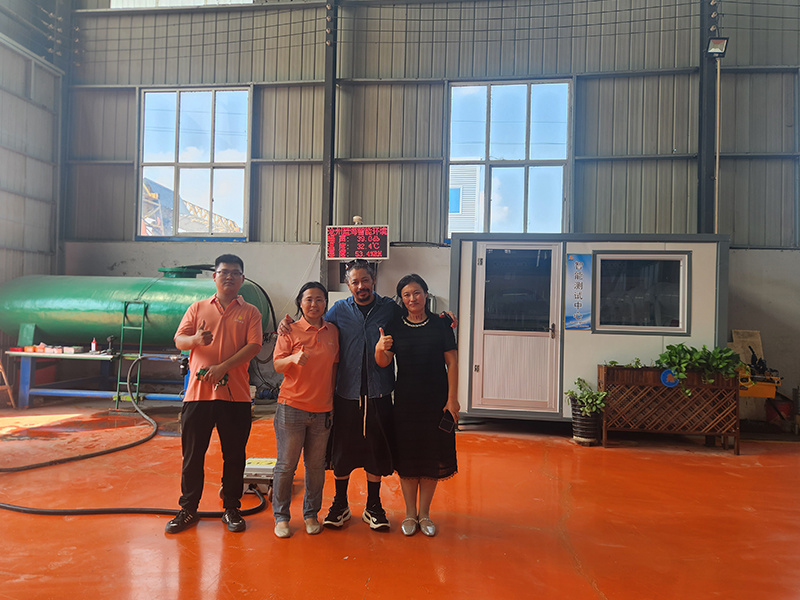
Customers come to visit our factory


Leave Message
Navigation
Contact Us
Address:
Jiaohe Industrial Park, Botou, Cangzhou city, Hebei province, China